
Request Free Consultation
To get answers to questions about your injury, contact Catalano Law for a FREE case evaluation. We’ll assess your case, explain your legal options, and recommend the next steps at no cost. We’re here when you need us.
Contact Form
General Contact Form
If you were just T-boned at an intersection, your first concern was probably whether you and your passengers were uninjured. Once that is determined, the next question usually follows fast: whose fault was this?
It’s a fair question, but the answer isn’t always as obvious as it seems. Fault doesn’t come down to which car hit the other. It comes down to who had the right of way. For example, a driver who gets hit from the side may still be responsible if they ran a red light, rolled through a stop sign, or turned left into oncoming traffic.
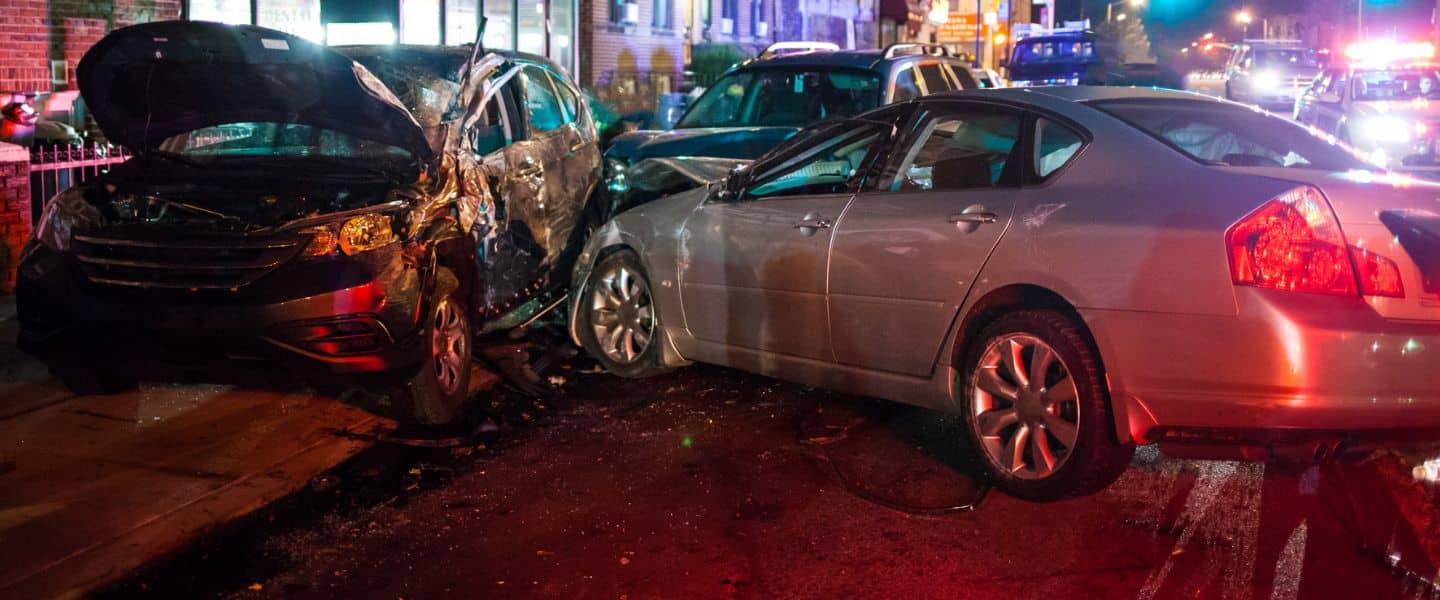
What makes these crashes especially serious is the lack of protection on the side of most vehicles. Unlike the front or rear, there’s no engine block or reinforced crumple zone to absorb impact—just a door and a window. That’s why T-bone collisions often lead to more severe injuries, including fractures, head trauma, and internal damage.
If you or a loved one is dealing with severe injuries, you shouldn’t have to fight insurance companies alone. The experienced car accident lawyers at Catalano Law are ready to investigate your crash, establish liability, and pursue the full compensation you deserve.
Contact Catalano Law today for a free, no-obligation case evaluation, and let us handle the legal burden while you focus on healing.
How Fault Is Determined in a T-Bone Collision
At its core, fault comes down to one key question: who had the right-of-way—and who failed to yield it?
In many cases, the answer is straightforward. One driver runs a red light and is struck by a legally proceeding vehicle. A driver at a stop sign pulls out before traffic clears. Someone making a left turn misjudges an oncoming vehicle, or a car enters from a parking lot or side street without yielding.
In each of these situations, the driver who entered the intersection improperly is usually at fault.
That said, fault isn’t always all-or-nothing. If one driver runs a red light but the other is speeding well above the limit, both may share responsibility. Insurance adjusters, and sometimes juries, look at the full picture when determining how fault is divided.
There are also situations where someone else may be responsible. A driver who swerves to avoid a hazard and forces another vehicle into a side-impact crash could be liable, even without making contact. In other cases, the issue may trace back to a defective vehicle part or even a malfunctioning traffic signal, which could shift responsibility to a manufacturer or municipality.
New York’s No-Fault Insurance and T-Bone Accidents
New York is a no-fault auto insurance state. After any car accident, your own insurance company covers your initial medical expenses and lost wages through Personal Injury Protection (PIP), up to $50,000, regardless of who caused the crash.
But PIP has real limits. It only covers economic losses, such as medical bills and a portion of lost wages. It does not cover pain and suffering. And $50,000 can disappear fast when a T-bone accident sends you to the emergency room, into surgery, and through weeks of rehabilitation.
To pursue a claim against the at-fault driver for compensation beyond PIP, your injuries must meet New York’s serious injury threshold under Insurance Law § 5102(d). The law lists nine qualifying categories, including fractures, significant disfigurement, permanent loss of use of a body organ or member, and the inability to perform all of your usual daily activities for 90 or more of the first 180 days after the accident.
T-bone accidents frequently produce injuries that qualify. Broken ribs, pelvic fractures, traumatic brain injuries, and spinal cord damage occur at higher rates in side-impact crashes than in many other collision types.
How Comparative Negligence Affects Your Claim
New York follows what’s called a “pure comparative negligence” rule under CPLR § 1411. In simple terms, that means you can still recover compensation even if you were partly at fault, but your recovery is reduced based on your share of responsibility.
Here’s what that looks like in real life. If your total damages are $100,000 and you’re found to be 20% at fault, your recovery would be reduced to $80,000. Unlike some states that cut off recovery once you reach a certain level of fault, New York doesn’t have that kind of limit. Even if someone is found 99% at fault, they can still recover 1% of their damages.
This matters more than most people realize. Insurance adjusters aren’t just deciding if they’ll pay—they’re working to assign you as much fault as possible. Every percentage point they add to your share directly reduces what their company owes.
And those percentages aren’t set in stone. They’re often negotiated, argued, and, if necessary, decided by a jury. Having an experienced Syracuse car accident lawyer on your side can make a meaningful difference in where that number ultimately lands.
What Evidence Helps Prove Fault After a T-Bone Accident
Strong cases are built on evidence gathered in the hours and days after a crash—not weeks later. That’s why acting quickly matters.
An attorney can help secure evidence you may not be able to access on your own, such as traffic camera footage, cell phone records, and professional reconstruction analysis. The team at Catalano Law can begin preserving this evidence immediately after your free consultation.
Some of the most valuable evidence comes from video.
Traffic cameras and dashcams can capture exactly what happened in the moments leading up to impact. Police reports also play an important role, documenting the officer’s observations, including traffic signals, road conditions, and any citations issued at the scene. Witness statements add another layer, offering perspectives that photos alone can’t provide.
The vehicles themselves can also reveal critical details.
The location and angle of damage help accident reconstruction experts determine how the collision occurred—specifically, which vehicle was already in the intersection, and which entered it. Skid marks can show braking patterns and give clues about speed and reaction time.
The challenge is that this kind of evidence doesn’t last long.
Dashcams often record on a loop and may overwrite footage within days. Witnesses’ memories fade. Physical evidence, like skid marks, can disappear with traffic and weather.
Frequently Asked Questions About T-Bone Accident Fault
In New York, figuring out who is at fault and what happens next isn’t always straightforward. The state’s no-fault insurance system and comparative negligence rules add layers of complexity to how fault—and compensation—are determined. The following are some of the most common questions clients ask after a T-bone accident.
Can I Be at Fault if I Was the One Who Got T-Boned?
Yes. Being the vehicle that got struck does not automatically make the other driver responsible. If you pulled into an intersection against a red light or failed to yield, you may bear fault even though the other car hit your side. Fault turns on who violated traffic laws, not the direction of impact.
What if Both Drivers Share Fault for a T-Bone Accident?
New York allows both drivers to share fault and still recover compensation. Your percentage of responsibility reduces your award. If you were 30% at fault and your damages total $50,000, you could recover $35,000.
Does My No-Fault Insurance Cover a T-Bone Accident?
Yes. PIP coverage pays for medical expenses and a portion of lost wages up to $50,000, regardless of who caused the accident. You do not need to prove fault to file a no-fault claim. If your injuries qualify as serious under New York law, you may also pursue additional compensation from the at-fault driver.
How Long Do I Have to File a Claim After a T-Bone Accident in New York?
You have three years from the date of the accident to file a personal injury lawsuit under CPLR § 214. If a government vehicle or entity was involved, you must file a Notice of Claim within 90 days. For no-fault PIP benefits, you must notify your insurer within 30 days of the accident. Starting early preserves your options and gives your attorney time to build a strong case.
Should I Get a Lawyer After a T-Bone Accident?
If your injuries go beyond minor soreness, yes. An experienced car accident lawyer can evaluate whether your injuries meet the serious injury threshold, handle communication with insurance companies, preserve critical evidence before it disappears, and push back against inflated fault percentages designed to reduce your compensation.
Contact Catalano Law After a T-Bone Accident
Figuring out who was at fault in a T-bone accident is not always straightforward, and the insurance company’s answer is not always right. If you were hurt in a side-impact collision in Syracuse, Utica, or anywhere in Central New York, Catalano Law can help you understand your options and fight for the compensation you deserve.
Peter Catalano and his team have recovered hundreds of millions of dollars for clients across Central New York. You pay nothing unless we win your case. That’s part of our No Fee Guarantee®.
Contact the car accident lawyers at Catalano Law or call today for a free consultation. Catalano Wins!
“Prior results do not guarantee a similar outcome.
